What Is International Safety Certification and Why It Matters: Your Complete Guide
Here’s something that might surprise you: every year, workplace accidents claim over 2.3 million lives globally and cause around 340 million occupational injuries. Behind those staggering numbers are real people—someone’s colleague, someone’s parent, someone’s friend who went to work and didn’t come home safely.
Now, here’s the good news. Organisations that invest in internationally recognised safety systems reduce their incident rates by up to 60%. That’s not just a feel-good statistic—that’s lives saved, families kept whole, and communities made stronger.
International safety certification sits right at the heart of this transformation. But if you’re wondering what it actually is, why companies pursue it, or whether it’s worth the investment, you’re asking the right questions. Let’s dive in and unpack everything you need to know about international safety certification—from the basics to the business case to the real-world impact.

What Exactly Is International Safety Certification?
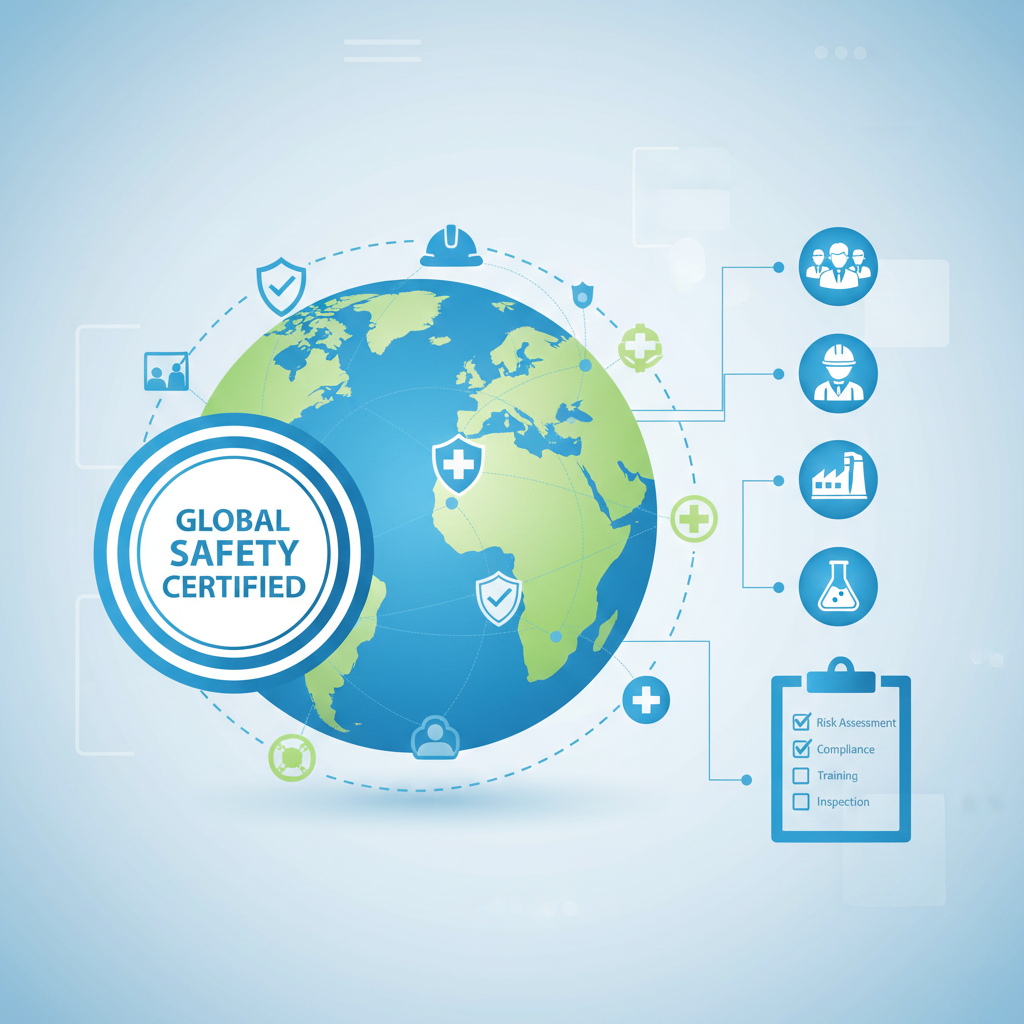
At its core, international safety certification is a formal recognition that an organisation meets globally accepted standards for workplace health, safety, and environmental protection. Think of it as a seal of approval from independent third parties that says, “This organization has proven systems in place to protect workers and operate responsibly.”
But it’s way more than just a certificate to hang on the wall.
When an organization pursues international safety certification, they’re committing to:
- Implementing structured management systems that identify and control workplace hazards
- Following internationally recognized best practices (not just minimum legal requirements)
- Continuously improving their safety performance over time
- Demonstrating their commitment through independent audits and verification
The key word here is “international.” Unlike local or national safety requirements that vary wildly from country to country, international safety certifications provide consistent frameworks that work across borders. This matters enormously in our globalized economy where companies operate in multiple countries, supply chains span continents, and workers might transfer between facilities in different regions.
The Major Players: Types of International Safety Certifications
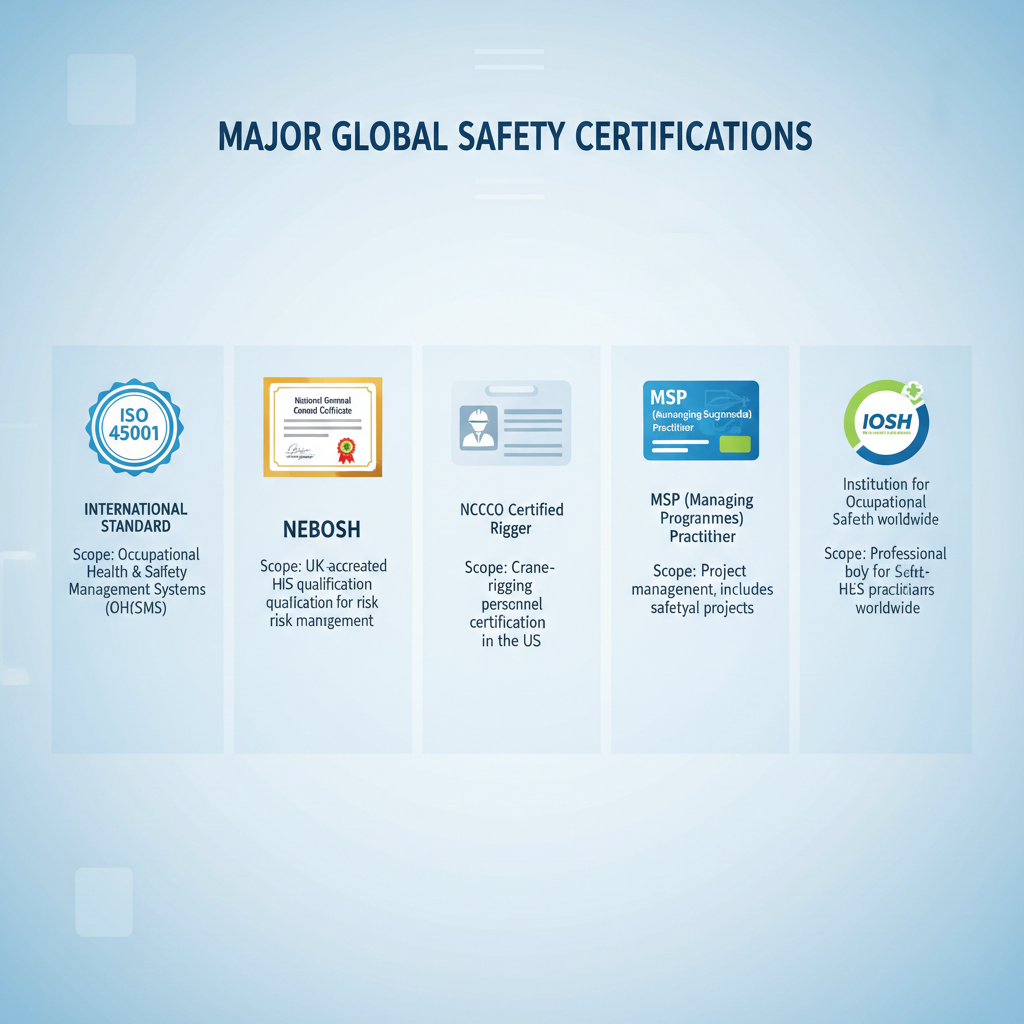
Let’s talk about the specific certifications you’ll actually encounter in the real world. While dozens exist for specialized industries, a few dominate the landscape:
ISO 45001: The Gold Standard
If there’s one certification that’s become synonymous with international workplace safety, it’s ISO 45001. Published in March 2018 by the International Organization for Standardization, ISO 45001 replaced the earlier OHSAS 18001 standard and represents the current global benchmark for Occupational Health and Safety Management Systems (OHSMS).
ISO 45001 isn’t industry-specific—it works for tiny startups and massive multinational corporations alike. Whether you’re running a construction company, a chemical plant, a hospital, or a tech firm, ISO 45001 provides the framework.
What makes ISO 45001 particularly powerful is its structure. It follows the “Annex SL” format, which means it aligns seamlessly with other major ISO standards like ISO 9001 (quality management) and ISO 14001 (environmental management). Organizations can integrate these systems rather than managing them separately, which saves time, reduces redundancy, and creates a more cohesive approach to operational excellence.
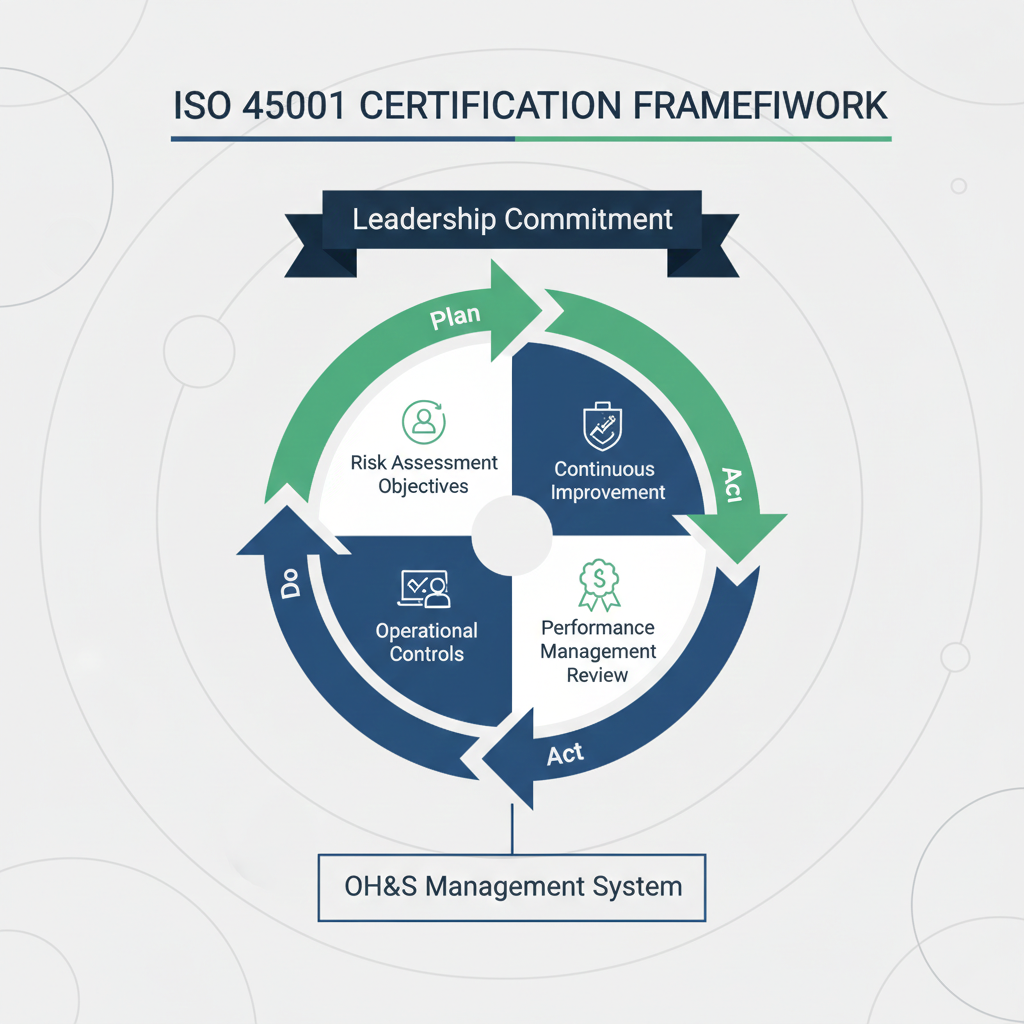
The standard requires organizations to:
- Assess their specific context and identify interested parties (workers, regulators, communities)
- Establish leadership commitment from the top
- Plan for risk management and legal compliance
- Implement operational controls
- Monitor performance and conduct internal audits
- Continuously improve based on data and feedback
NEBOSH: Professional Credentials
While ISO 45001 certifies organizations, NEBOSH (National Examination Board in Occupational Safety and Health) certifies individuals. Based in the UK but recognized globally, NEBOSH offers internationally respected qualifications for safety professionals at various career stages.
The NEBOSH International General Certificate is probably their most famous credential. Safety practitioners worldwide pursue it to demonstrate foundational competency in health and safety management. More advanced qualifications like the NEBOSH International Diploma prepare professionals for senior roles and specialized practice.
Why does individual certification matter? Because systems are only as good as the people implementing them. Organizations staffed with NEBOSH-certified professionals benefit from teams who speak a common safety language, understand best practices, and can apply principles consistently regardless of where they work.
NCCCO, NASP, and Specialized Certifications
Depending on your industry, you might encounter:
NCCCO (National Commission for the Certification of Crane Operators) – Rigger and crane operator certifications recognized internationally in construction and heavy industry
NASP/IASP – Offers Master Safety Professional (MSP) and Certified Safety Director (CSD) credentials accredited under ISO/IEC 17024 standards
IOSH (Institution of Occupational Safety and Health) – Professional membership and qualifications for safety practitioners
Maritime Certifications – ISM (International Safety Management) Code certification required for ships in international trade
Each serves specific niches, but they all share a common thread: providing internationally recognized verification of safety competence.
Why International Safety Certification Actually Matters
Okay, so certifications exist. But why should organizations invest the time, money, and effort to pursue them? Let’s get practical about the real-world benefits:
1. Lives Saved and Injuries Prevented
This is the obvious one, but it deserves emphasis. Certification isn’t academic—it drives behavioral and systematic changes that directly reduce harm.
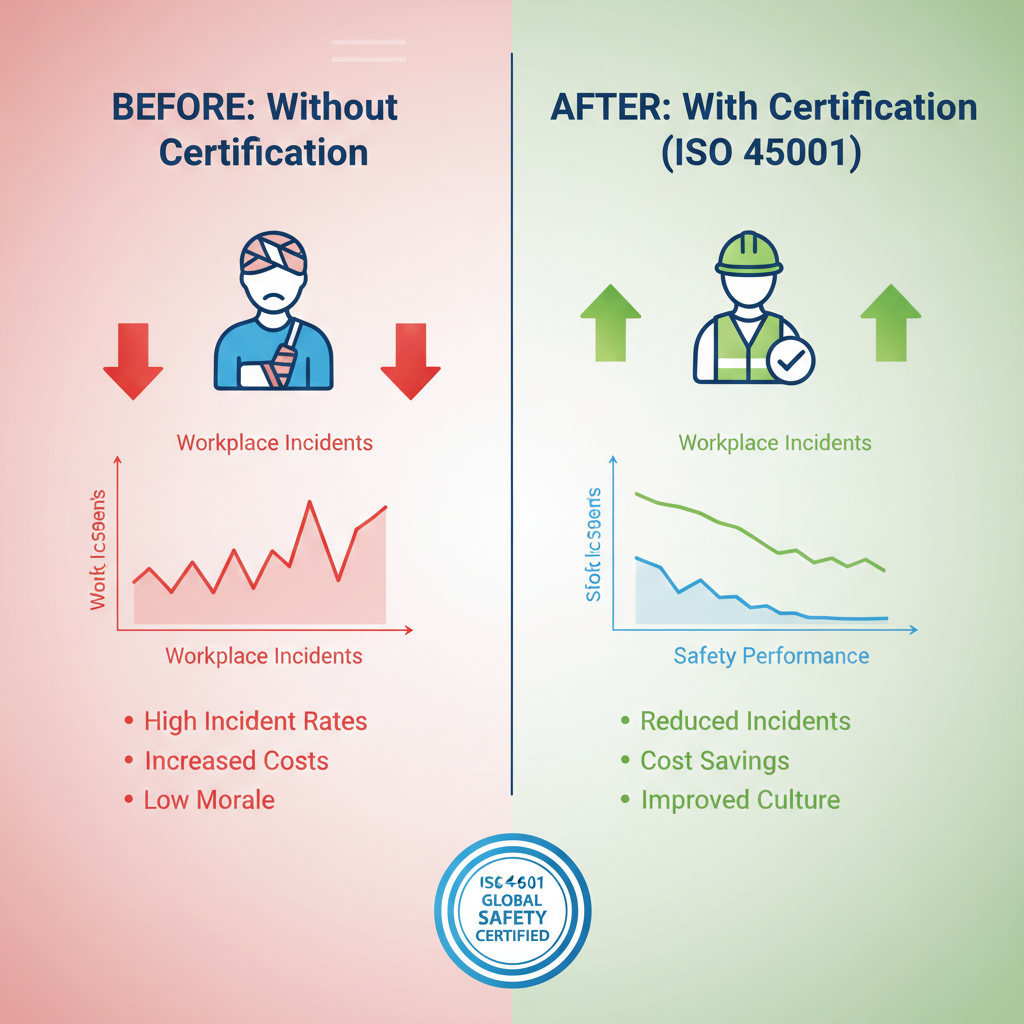
Research consistently shows that certified organizations experience significantly fewer workplace accidents, lower injury severity, and reduced fatalities compared to non-certified peers. When you implement structured hazard identification, risk assessment, and control measures (as certifications require), fewer people get hurt. It really is that straightforward.
Consider this: Organizations that achieve ISO 45001 certification typically report 20-40% reductions in lost-time injuries within the first two years. That’s not marketing spin—that’s people who still have full use of their hands, who avoided respiratory disease, who didn’t fall from heights.
2. Legal Protection and Regulatory Compliance
Here’s an uncomfortable truth: in many countries, failure to provide safe working conditions can result in criminal charges for executives and managers. When someone dies at work and investigations reveal negligent safety practices, people go to jail.
International safety certification provides substantial legal protection by demonstrating that you:
- Have implemented recognized safety management systems
- Conducted proper risk assessments
- Provided appropriate training
- Maintained equipment and facilities
- Documented everything
If (heaven forbid) a serious incident does occur, being able to show independent certification and comprehensive records proves you took reasonable precautions. That won’t prevent all liability, but it significantly strengthens your legal position.
Beyond crisis scenarios, certification also simplifies compliance across multiple jurisdictions. Rather than trying to navigate the specific requirements of dozens of different countries, certified organizations follow internationally accepted frameworks that meet or exceed most national regulations.
3. Access to Global Markets and Supply Chains
Want to bid on a major international construction project? Looking to supply components to multinational manufacturers? Hoping to provide services to Fortune 500 companies?
Increasingly, you’ll need to demonstrate certified safety management to even get in the door.
Major corporations face their own liability concerns. If a supplier or contractor has a terrible accident, it reflects poorly on them and can trigger legal exposure. As a result, procurement departments now routinely require evidence of safety certification before awarding contracts.
ISO 45001 certification has become table stakes for competing internationally. Companies without it find themselves excluded from lucrative opportunities simply because they can’t demonstrate the safety credibility buyers demand.
4. Financial Benefits That Go Beyond Avoiding Costs
Everyone understands that preventing accidents saves money—medical costs, workers’ compensation, legal fees, equipment replacement, production downtime. Those avoided costs alone often justify certification investment.
But the financial benefits extend further:
Lower Insurance Premiums: Many insurers offer substantial discounts (10-25% or more) for certified organizations. Some won’t even cover high-risk operations without certification.
Reduced Turnover: Workers gravitate toward employers who demonstrably care about their safety. Reduced turnover means lower recruitment and training costs.
Higher Productivity: Safe workplaces are more efficient. When workers aren’t worried about getting injured, when processes are well-controlled, when equipment is properly maintained, work flows smoothly.
Better Investor Relations: ESG (Environmental, Social, Governance) investing has exploded. Institutional investors increasingly favor companies with strong safety records, seeing them as better long-term bets.
One manufacturing company reported that their ISO 45001 certification process paid for itself within 18 months purely through insurance savings and reduced incident costs, without counting any of the other benefits.
5. Cultural Transformation and Employee Engagement
Here’s something certification consultants don’t always emphasize: the process of pursuing certification fundamentally changes how organizations think about safety.
To achieve certification, leadership must get involved. They can’t delegate safety to a single person and forget about it. The certification process forces senior management to understand safety risks, allocate resources, and publicly commit to improvement.
When workers see genuine commitment from the top, their own engagement increases. They report hazards more willingly. They follow procedures more consistently. They take ownership of safety rather than viewing it as someone else’s problem.
Certified organizations often describe this cultural shift as the most valuable outcome—more important even than the certificate itself. They’ve built organizations where safety is truly a core value, not just a compliance requirement.
The Certification Process: What Actually Happens
So you’re convinced certification matters. What does the journey actually look like? While specific paths vary by certification type, the general process follows a consistent pattern:
Phase 1: Gap Analysis and Preparation (2-6 months)
Organizations start by assessing their current state against certification requirements. This gap analysis reveals what you’re already doing well and what needs work.
For ISO 45001, you’d review your existing safety policies, procedures, training programs, incident records, and management structures. Where gaps exist, you develop action plans to address them.
This phase often involves:
- Forming an implementation team
- Training key personnel on standard requirements
- Documenting policies and procedures
- Establishing safety committees
- Implementing hazard identification processes
- Setting safety objectives and metrics
Many organizations bring in consultants for this phase, though it’s not required. Consultants can accelerate the process and help avoid common pitfalls, but smaller organizations sometimes navigate it independently using guidance documents and resources from certification bodies.
Phase 2: Implementation (6-12 months)
Now you actually build and operate your safety management system according to the standard’s requirements.
This isn’t just paperwork (though documentation is important). It’s changing how work gets done:
- Conducting comprehensive workplace risk assessments
- Implementing control measures for identified hazards
- Training all employees on new procedures
- Establishing reporting and communication systems
- Running internal audits to verify compliance
- Tracking performance metrics
- Making improvements based on what you learn
The timeline depends on your starting point. Organizations with mature safety programs might need only a few months to align with certification requirements. Those starting from scratch might need a year or more.
Phase 3: Internal Auditing and Management Review (Ongoing)
Before inviting external auditors, you need to verify your system works. This means conducting internal audits—systematic examinations of whether procedures are being followed and achieving intended results.
Many organizations train internal auditors specifically for this purpose (NEBOSH, IOSH, and others offer internal auditor training courses).
Top management then reviews audit findings, performance data, and employee feedback in formal management review meetings. They assess whether the system is achieving objectives and decide on improvements.
This creates a feedback loop: problems get identified, solutions get implemented, results get measured, further improvements get made.
Phase 4: External Certification Audit (1-2 weeks)
When you’re confident your system meets requirements, you engage an accredited certification body—an independent organization authorized to conduct audits and issue certificates.
The certification audit typically happens in two stages:
Stage 1 (Documentation Review): Auditors examine your documented policies, procedures, and records to verify your system design meets standard requirements. They’ll identify any gaps that need addressing before Stage 2.
Stage 2 (Implementation Audit): Auditors visit your workplace to observe actual practices, interview employees at all levels, review records, and verify that your documented system is actually being followed.
They’ll walk through facilities, watch work being performed, talk to frontline workers, and check everything from training records to equipment maintenance logs.
If they find non-conformities (things that don’t meet requirements), you’ll need to correct them. Minor issues might be addressed while maintaining certification. Major issues require correction before certification is granted.
When everything checks out, the certification body issues your certificate—typically valid for three years.
Phase 5: Surveillance and Recertification (Every 1-3 years)
Certification isn’t one-and-done. Accredited bodies conduct periodic surveillance audits (usually annually) to verify you’re maintaining your system.
Every three years, you undergo a full recertification audit—essentially repeating the Stage 2 process to confirm continued compliance and improvement.
This ongoing verification keeps organizations honest and ensures systems don’t decay over time.
Common Challenges (And How to Overcome Them)
Let’s be honest—pursuing international safety certification isn’t always smooth sailing. Here are challenges organizations typically face and practical strategies to overcome them:
Challenge 1: “It’s Too Expensive”
Certification costs money—consultant fees (if you use them), employee time, system improvements, audit fees, and ongoing maintenance. For small organizations, the investment can seem daunting.
The Reality: Most organizations find certification pays for itself relatively quickly through reduced insurance premiums, fewer accident costs, and improved efficiency. One safety manager put it this way: “Certification isn’t expensive—accidents are expensive. We’re just paying upfront instead of after the fact.”
Strategy: Start with a cost-benefit analysis. Calculate your current accident costs, insurance premiums, and turnover expenses. Project realistic reductions based on industry benchmarks for certified organizations. Most find the business case closes easily.
If budget is genuinely tight, consider phasing the implementation over time or pursuing simpler certifications first before graduating to more comprehensive standards.
Challenge 2: Documentation Overload
Standards like ISO 45001 require documented policies, procedures, work instructions, training records, audit reports, and more. Organizations sometimes drown in paperwork.
The Reality: Documentation requirements have actually become less onerous in newer standards. ISO 45001 requires far less documentation than its predecessor OHSAS 18001. The focus has shifted to having effective systems rather than mountains of paper.
Strategy: Document only what’s necessary—don’t gold-plate your system with excessive paperwork. Use templates and software tools designed for safety management systems. Many organizations now use cloud-based platforms that streamline documentation and record-keeping.
Remember that documentation serves a purpose: ensuring consistency and knowledge retention. When procedures are properly documented, new employees can learn quickly, and critical knowledge doesn’t leave when experienced workers retire.
Challenge 3: Employee Resistance
Workers sometimes view new safety initiatives cynically, seeing them as management’s latest fad that will fade away or create more work without real benefit.
The Reality: Resistance usually stems from poor communication about why certification matters and how it benefits workers themselves.
Strategy: Involve employees from the beginning. When workers participate in hazard assessments, help develop procedures, and see their input genuinely valued, buy-in follows naturally.
Communicate clearly about what certification means—safer working conditions, better equipment, more consistent training, and often improved job security since certified companies typically perform better financially.
Share success stories. When a new safety procedure prevents an injury that might have happened under the old system, publicize it. Make the benefits tangible.
Challenge 4: Maintaining Momentum
Organizations often approach certification with initial enthusiasm that wanes once the certificate is on the wall. Systems that aren’t actively maintained deteriorate.
The Reality: Certification requires ongoing commitment. The certificate itself isn’t the goal—the continuous safety improvement it drives is the goal.
Strategy: Build safety into regular business rhythms. Make safety management review a standing agenda item in leadership meetings. Schedule internal audits on a fixed calendar. Set annual safety objectives that align with business goals.
Use your surveillance audits as opportunities for improvement rather than viewing them as burdens. When auditors identify areas for enhancement, treat those as valuable external perspectives.
Celebrate improvements and milestones. When you achieve a year without lost-time injuries, when you successfully complete a recertification audit, when you implement a new control measure—acknowledge those wins.
Challenge 5: Choosing the Right Certification
With multiple certifications available, organizations sometimes struggle with which one to pursue.
The Reality: For most organizations, ISO 45001 is the right starting point. It’s globally recognized, works across all industries, and integrates well with other management systems.
Strategy: Consider your specific needs:
- Operating internationally? ISO 45001 is almost certainly your best bet.
- Working primarily in specific regions? Check if local standards like OSHA (US) or HSE (UK) regulations plus ISO 45001 make sense.
- In specialized industries? Maritime companies need ISM; construction might add OSHA certifications; oil and gas often requires industry-specific credentials.
You’re not limited to one certification. Many organizations hold multiple credentials that address different aspects of their operations.
ISO 45001 Deep Dive: What Makes It Special
Since ISO 45001 dominates the international certification landscape, let’s look closer at what makes it work so well:
The High-Level Structure Advantage
ISO 45001 follows Annex SL—the standardized framework that all modern ISO management system standards use. This matters because organizations often need multiple certifications:
- ISO 9001 for quality management
- ISO 14001 for environmental management
- ISO 45001 for occupational health and safety
- ISO 50001 for energy management
Because they all share the same basic structure with common clauses, you can integrate these systems rather than managing them separately. Your context analysis serves all standards. Your management review covers all systems. Your internal audits can be combined.
This integration saves enormous effort and creates synergies. Quality problems often have safety implications. Environmental issues frequently involve worker exposure risks. Energy efficiency projects might affect workplace conditions. An integrated system addresses all these connections holistically.
Leadership and Worker Participation
ISO 45001 makes two things absolutely non-negotiable:
Leadership Commitment: Top management must demonstrably commit to the OH&S system. This isn’t optional or delegable. Leaders must establish the safety policy, ensure resources are available, and hold themselves accountable for results.
Worker Participation: Workers must be involved in the OH&S system—contributing to hazard identification, participating in incident investigations, being consulted on changes. This requirement recognizes that workers often understand workplace hazards better than anyone else.
These requirements fundamentally change power dynamics around safety. It’s no longer the safety manager’s job alone—it’s everyone’s responsibility with clear accountability at every level.
Risk-Based Thinking
ISO 45001 requires organizations to think about risks and opportunities in a structured way. This goes beyond traditional reactive safety (responding to accidents after they happen) to proactive safety (preventing problems before they occur).
Organizations must:
- Identify hazards and assess associated risks
- Determine legal and other requirements
- Consider organizational context and interested parties
- Identify opportunities for improvement
- Plan actions to address risks and opportunities
- Implement those actions and verify effectiveness
This systematic approach ensures nothing falls through the cracks and that limited resources get directed to the highest priorities.
Planning and Operational Controls
The standard requires detailed planning for how work will be done safely. This includes:
Hazard Identification: Systematic processes for spotting dangers—not just obvious ones like unguarded machinery, but also subtle issues like ergonomic problems or psychosocial hazards
Risk Assessment: Evaluating the likelihood and severity of potential harm to prioritize action
Control Hierarchy: Applying the most effective controls first (elimination, substitution, engineering controls, administrative controls, PPE)
Operational Planning: Establishing the conditions under which work can be done safely, including contractor management, procurement controls, and emergency procedures
Change Management: Assessing health and safety implications before implementing changes to processes, facilities, or equipment
This planning-focused approach prevents organizations from simply reacting to problems after they’ve occurred.
Performance Monitoring and Continuous Improvement
ISO 45001 requires organizations to:
- Establish key performance indicators for safety
- Monitor and measure those indicators regularly
- Analyze data to identify trends and opportunities
- Conduct periodic management reviews
- Undertake internal audits
- Investigate incidents thoroughly
- Take corrective actions when things go wrong
- Continuously improve the system based on all this information
The Plan-Do-Check-Act cycle embedded in the standard ensures that organizations never stagnate. There’s always another improvement to make, another risk to address, another opportunity to enhance safety.
Industry-Specific Applications
While ISO 45001 works universally, how it gets implemented varies by industry. Let’s look at a few examples:
Construction: Dynamic Risk Management
Construction sites are chaotic environments where conditions change daily. One day you’re excavating foundations, the next you’re erecting steel, then you’re doing electrical work and finishing. Each phase brings different hazards.
ISO 45001 certification in construction focuses heavily on:
- Site-specific hazard assessments updated as work progresses
- Contractor coordination (multiple companies working simultaneously)
- Temporary structure safety (scaffolding, shoring, formwork)
- Height work protection
- Equipment safety management
- Weather-related risk adjustments
Successful construction companies build ISO 45001 requirements into their project management processes from the bidding phase through completion.
Manufacturing: Process Safety Integration
Manufacturing facilities benefit from ISO 45001’s alignment with quality and environmental standards. A single non-conformity might involve all three systems—defective product (quality issue) that could injure users (safety issue) and create hazardous waste (environmental issue).
ISO 45001 in manufacturing emphasizes:
- Machine safety and lockout/tagout procedures
- Chemical hazard management
- Ergonomic workstation design
- Repetitive task injury prevention
- Production process safety controls
- Maintenance safety procedures
Healthcare: Patient and Worker Protection
Healthcare presents unique challenges—biological hazards, needlestick injuries, patient handling, infectious disease exposure, workplace violence, and high-stress environments.
ISO 45001 certification in healthcare addresses:
- Infection control procedures
- Proper PPE selection and use
- Safe patient handling techniques
- Stress management for healthcare workers
- Sharps injury prevention
- Emergency preparedness (both for external events and internal crises)
The COVID-19 pandemic demonstrated how critical these systems are, with certified healthcare facilities generally better prepared for the crisis.
Oil and Gas: High-Consequence Risk Management
Oil and gas operations deal with extreme risks—explosions, fires, toxic releases, remote locations, harsh environments. The consequences of failure can be catastrophic.
ISO 45001 in this sector integrates with industry-specific standards like API (American Petroleum Institute) requirements and often combines with process safety management systems.
Key focus areas include:
- Process hazard analysis
- Emergency response capabilities
- Permit-to-work systems
- Simultaneous operations management
- Offshore working environment safety
- Pipeline integrity management
The Global Impact: Why International Standards Matter
Let’s zoom out and consider why international (versus national) safety standards matter for the world:
Consistency Across Borders
A worker in Germany, Mexico, and Malaysia should all be protected by equivalent safety systems when working for the same multinational corporation. International standards like ISO 45001 make this possible.
Without international standards, companies might apply rigorous safety measures in countries with strict regulations while taking shortcuts in countries with weaker enforcement. International certification creates consistency—protecting workers equally regardless of geography.
Raising the Bar Globally
When international standards establish best practices, they effectively raise the floor for safety performance worldwide. Developing countries benefit from frameworks developed by global experts, avoiding the need to reinvent approaches to common hazards.
As more organizations pursue ISO 45001 certification, suppliers and partners in their value chains face pressure to improve their own practices. This creates a positive ripple effect throughout entire industries and regions.
Facilitating International Business
Imagine trying to operate globally if every country required completely different safety management approaches. The complexity would be overwhelming, and smaller organizations couldn’t compete internationally.
International standards create common ground. A company ISO 45001-certified in Japan can confidently bid on projects in Brazil, knowing the certification demonstrates credible safety management that Brazilian clients will recognize and value.
Knowledge Sharing and Innovation
International standards organizations bring together safety experts from around the world. This cross-pollination of ideas means that innovations in one country quickly spread globally.
A better approach to preventing slips and falls developed in Scandinavia gets incorporated into standards that influence practices in Africa and Asia. Everyone benefits from the world’s collective safety knowledge.
The Future of International Safety Certification
Where is all this headed? Several trends are shaping the future of safety certification:
Integration with ESG and Sustainability
Environmental, Social, and Governance (ESG) criteria increasingly drive investment decisions. The “S” in ESG heavily emphasizes worker health and safety.
Expect tighter integration between safety certification and broader sustainability frameworks. Organizations may pursue integrated certifications that address safety, environmental responsibility, and social impact together.
Digital Transformation
Software platforms are revolutionizing how safety systems get managed. Cloud-based tools enable:
- Real-time hazard reporting from mobile devices
- Automated compliance tracking
- Data analytics that identify trends and predict risks
- Digital audit trails
- Integration with operational systems
Future certifications will likely incorporate requirements around digital capabilities, data security, and technology-enabled safety management.
Focus on Psychosocial Risks
Mental health, workplace stress, harassment, and psychological wellbeing are increasingly recognized as critical safety issues. The new ISO 45003 guideline specifically addresses psychological health and safety at work.
Future certifications will place greater emphasis on holistic wellbeing—not just preventing physical injuries but supporting mental health, promoting work-life balance, and addressing organizational factors that affect psychological safety.
Industry 4.0 and Automation
As workplaces incorporate more robotics, artificial intelligence, and automated systems, safety considerations evolve. Human-machine interfaces, autonomous equipment safety, and cybersecurity implications for safety systems all become relevant.
Standards will continue adapting to address these emerging technologies while maintaining core safety principles.
Greater Emphasis on Supply Chain Safety
Major corporations increasingly recognize that their safety reputation depends partly on suppliers and contractors. Expect stronger requirements for demonstrating that entire value chains meet international safety standards, not just primary organizations.
How to Get Started with International Safety Certification
Ready to pursue certification? Here’s your practical roadmap:
Step 1: Define Your Objectives
Why do you want certification? Possible reasons include:
- Qualifying for international contracts
- Reducing accident rates and insurance costs
- Meeting customer requirements
- Demonstrating corporate responsibility
- Creating competitive advantage
- Driving cultural change
Clear objectives help you choose the right certification and maintain commitment when challenges arise.
Step 2: Choose Your Certification
For most organizations, ISO 45001 is the logical choice. It’s globally recognized, industry-agnostic, and integrates with other ISO standards.
Supplement with industry-specific certifications if needed (ISM for maritime, OSHA certifications for US construction, etc.).
Step 3: Conduct a Gap Analysis
Compare your current safety management practices against certification requirements. This reveals what you’re already doing well and what needs development.
Many certification bodies offer preliminary assessments. Consultants can also conduct gap analyses and provide implementation roadmaps.
Step 4: Build Your Team
Identify internal champions who will drive the implementation. This typically includes:
- Executive sponsor (senior leader who provides resources and removes obstacles)
- Implementation coordinator (often the safety manager or someone in a similar role)
- Department representatives
- Worker representatives
Provide team members with appropriate training on the standard’s requirements.
Step 5: Develop Your System
Working systematically through the standard’s requirements, build your safety management system:
- Document your safety policy
- Establish procedures for hazard identification and risk assessment
- Define roles and responsibilities
- Create operational controls
- Implement training programs
- Set up monitoring and measurement processes
- Establish audit and review procedures
Step 6: Implement and Monitor
Put your system into operation. This is where theory meets practice—procedures get followed, training gets delivered, audits get conducted, metrics get tracked.
Monitor performance closely. Are procedures being followed? Are they effective? What problems are emerging? Make adjustments as needed.
Step 7: Select a Certification Body
Choose an accredited certification body to conduct your audit. Look for:
- Appropriate accreditation (ANAB in the US, UKAS in the UK, etc.)
- Experience in your industry
- Reasonable costs
- Good reputation
- Auditors with relevant technical knowledge
Get quotes from multiple bodies and check references.
Step 8: Complete Certification Audit
Work with your certification body through the two-stage audit process. Address any non-conformities identified. Achieve certification.
Step 9: Maintain and Improve
Use surveillance audits as opportunities to improve. Keep your system active and engaged. Continuously work on getting better.
Set annual improvement objectives. Celebrate achievements. Build safety into your organizational DNA.
Frequently Asked Questions
Q: How long does it take to get ISO 45001 certified?
Typically 12-18 months from decision to certification, though it varies based on your starting point. Organizations with mature safety programs might achieve certification in 6-9 months. Those starting from scratch might need 24 months.
Q: How much does certification cost?
Costs vary widely based on organization size and complexity. For a medium-sized company, expect $15,000-$50,000 including consultant fees (if used), system development, audit fees, and employee time. Smaller organizations might spend $5,000-$15,000. Large multinationals can invest hundreds of thousands.
However, most organizations recoup these costs through insurance savings and reduced accidents within 1-3 years.
Q: Do we need a consultant?
Not necessarily. Many organizations implement certification independently using guidance documents and online resources. However, consultants can accelerate the process, help avoid common mistakes, and provide expertise you might lack internally. They’re particularly valuable for first-time certification or organizations with limited safety management experience.
Q: Is certification legally required?
In most cases, no—it’s voluntary. However, some industries and contracts effectively require it. Maritime vessels in international trade must have ISM certification. Many government contracts and major corporate supply agreements require ISO 45001 or equivalent certification.
Q: What’s the difference between certification and accreditation?
Certification is what organizations receive when they meet standard requirements. Accreditation is what certification bodies receive from oversight organizations, confirming they’re competent to conduct audits. Always choose an accredited certification body.
Q: Can we lose our certification?
Yes. If surveillance audits reveal serious non-conformities that aren’t corrected, or if you fail to maintain your system, certification can be suspended or withdrawn. This rarely happens to organizations genuinely committed to safety, but it’s not automatic—you must actively maintain your system.
Q: Does certification guarantee no accidents?
No. Certification reduces risk and prevents many accidents, but it can’t eliminate all possibility of incidents. What it does is establish systematic approaches to identifying hazards, controlling risks, and continuously improving—dramatically reducing the likelihood and severity of accidents.
The Bottom Line: Is International Safety Certification Worth It?
After everything we’ve covered, here’s my honest take:
For organizations operating internationally, competing for major contracts, or genuinely committed to protecting their workers, international safety certification isn’t just worth it—it’s essential.
The investment pays back through:
- Fewer people getting hurt (which should be reason enough on its own)
- Lower insurance costs and reduced accident expenses
- Access to global markets and major customers
- Better employee retention and engagement
- Improved operational efficiency
- Stronger legal protection
- Enhanced reputation and stakeholder confidence
The process isn’t always easy. It requires commitment, resources, and sustained effort. But organizations consistently report that the journey transforms how they think about safety, creating cultures where protecting workers becomes genuinely embedded in how business gets done.
Is it perfect? No. Certification alone doesn’t solve every safety challenge. But it provides structured, proven frameworks that work. When implemented with genuine commitment, international safety certification makes workplaces measurably safer and organizations demonstrably better.
And in a world where 2.3 million workers still die from workplace causes every year, that matters enormously.
Ready to pursue international safety certification for your organization? Start with a gap analysis to understand where you stand, engage leadership to secure commitment, and take the first steps toward joining the global community of certified organizations working to make workplaces safer worldwide.