OHS Audit Services |
See the Risks. Verify the Controls. Strengthen Your Safety Performance.
- Home
- Industrial Services
- OHS Audit Services
See the Risks. Verify the Controls. Strengthen Your Safety Performance.
A strong Occupational Health and Safety system cannot be measured only by policies, procedures and statistics. Organisations need independent assurance that their safety systems are actually implemented, workplace risks are effectively controlled, legal and other requirements are addressed, and people at every level are following the controls established to protect them.
Safety Catch OHS Audit Services provide organisations with a structured, evidence-based evaluation of their occupational health and safety performance.
Our audits go beyond checklist compliance. We examine how effectively your OHS management system works in practice—across leadership, planning, risk management, operational controls, contractor management, workforce participation, high-risk activities, emergency preparedness and continual improvement.
The objective is simple:
Identify what is working, uncover what is vulnerable and provide a practical roadmap for improvement.


Why OHS Auditing Matters
Workplaces continuously change.
New employees join. Contractors mobilise. Equipment changes. Production pressures increase. Projects progress into different phases. Procedures are revised. New hazards emerge.
Even organisations with established safety management systems can therefore develop gaps between:
what the organisation requires, what the procedure says, what supervisors believe is happening and what is actually happening at the workplace.
An effective OHS audit helps management identify these gaps before they contribute to incidents, regulatory exposure, operational interruption or reputational damage.
A well-designed audit also provides leadership with an objective view of whether safety resources and controls are producing the intended results.
Our OHS Audit Services
Safety Catch provides customised Occupational Health and Safety audits for organisations, projects, manufacturing facilities, construction sites and other workplaces.
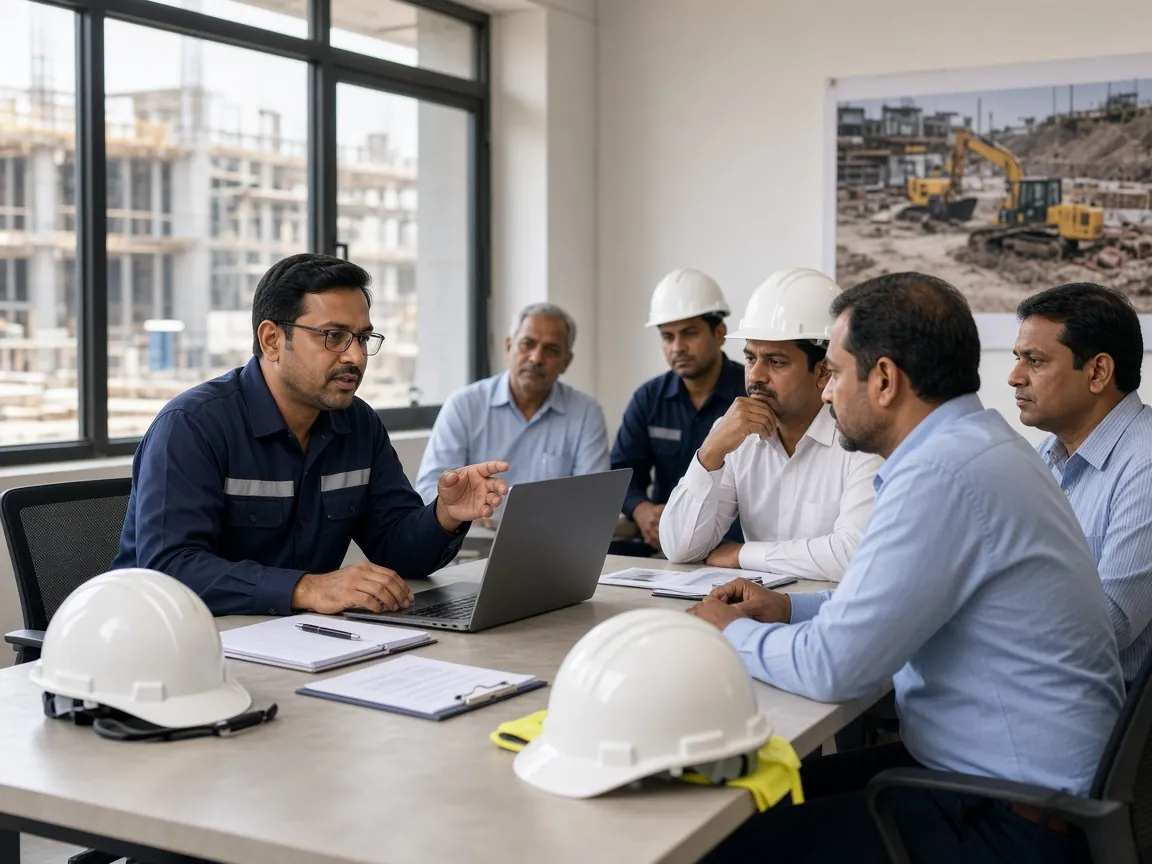
The audit may examine:
- OHS policy and governance
- Leadership and management commitment
- Roles, responsibilities and accountability
- Consultation and worker participation
- Hazard identification and risk assessment
- Legal and other compliance obligations
- Objectives and OHS improvement programmes
- Operational planning and control
- Management of change
- Procurement and contractor controls
- Competence and training systems
- Communication and documentation
- Emergency preparedness
- Incident reporting and investigation
- Inspection and monitoring systems
- Corrective-action management
- Performance evaluation
- Management review
- Continual improvement
OHS Management System Audit
A comprehensive evaluation of the organisation’s occupational health and safety management framework and its implementation.
ISO 45001 Audit & Gap Assessment
Safety Catch can assess an organisation’s existing OHS management arrangements against the requirements and intent of ISO 45001 Occupational Health and Safety Management Systems.
The assessment helps organisations understand:
- Where they conform
- Where gaps exist
- Where implementation is weak
- Where documented systems and actual practices differ
- What actions should be prioritised
ISO 45001 gap assessments can support organisations preparing for implementation, certification, surveillance audits, recertification or improvement of an already established system.
Safety Catch’s role is to provide professional assessment and improvement guidance. Formal certification is undertaken separately by an appropriately accredited certification body.
Legal & Regulatory Compliance Audit
Organisations operate within multiple occupational health, safety, fire, environmental and sector-specific regulatory requirements.
Our compliance audits can evaluate whether relevant workplace arrangements, records, statutory controls, licences, inspections, certificates and operating practices are being effectively managed.
The audit may include review of:
statutory registers, mandatory inspections, licences and approvals, equipment certification, competency requirements, workplace conditions, welfare arrangements, fire and emergency requirements, contractor controls and other applicable occupational health and safety obligations.
The final audit report identifies potential compliance gaps requiring management attention.
Typical areas may include:
- Access and egress
- Housekeeping
- PPE management
- Work at height
- Scaffolding
- Lifting operations
- Electrical safety
- Machinery and equipment safety
- Lockout / Tagout
- Confined spaces
- Excavation and trenching
- Hot work
- Material handling
- Vehicle and pedestrian movement
- Chemical management
- Permit-to-work systems
- Fire prevention
- Emergency preparedness
- Occupational health controls
- Welfare facilities
Findings are evaluated not merely as isolated observations but as indicators of underlying weaknesses in planning, supervision, competency, risk assessment or management systems.
Workplace & Site Safety Audit
A workplace safety audit provides a practical assessment of conditions and behaviours at the point where work is actually performed.
Our auditors examine both unsafe conditions and weaknesses in the management controls that allowed those conditions to develop.
Construction & Project HSE Audit
Large construction and EPC projects involve rapidly changing hazards, multiple contractors and simultaneous high-risk activities.
Safety Catch can conduct independent HSE audits covering project-level arrangements such as:
project HSE planning, mobilisation, contractor management, permit-to-work controls, temporary works, lifting operations, scaffolding, excavation, work at height, electrical safety, traffic management, welfare, emergency preparedness, incident management and site leadership.
Audits can be conducted at defined project stages or periodically throughout the project lifecycle.
Contractor & Subcontractor HSE Audit
Contractor performance can significantly influence an organisation’s overall HSE risk profile.
Our contractor audits can evaluate:
prequalification arrangements, mobilisation readiness, competency, risk assessments, method statements, supervision, permit compliance, equipment certification, training, high-risk activity controls, incident performance, corrective-action closure and contractor management systems.
The audit provides the principal employer or project management team with an independent assessment of contractor HSE capability and implementation.
High-Risk Activity Audits
Safety Catch can conduct focused audits where organisations require deeper assurance over specific critical activities.
These may include:
- Work at Height Audits
- Verification of planning, access systems, fall prevention, fall protection, anchor arrangements, rescue planning and supervision.
- Scaffolding Audits
- Assessment of erection, inspection, tagging, loading, access, modification controls and compliance with applicable requirements.
- Lifting Operations Audits
- Review of lifting plans, cranes, lifting accessories, competency, rigging practices, exclusion zones and lifting supervision.
- Electrical Safety Audits
- Assessment of electrical installations, temporary electrical systems, isolation practices, inspection arrangements and electrical risk controls.
- Confined Space Audits
- Review of identification, permits, atmospheric testing, isolation, entry controls, standby arrangements and rescue preparedness.
- Permit-to-Work Audits
- Evaluation of permit quality, authorisation, coordination, field verification, isolation controls and permit closeout.
- Fire & Emergency Preparedness Audits
- Assessment of prevention systems, fire protection, evacuation arrangements, emergency equipment, drills and command arrangements.
Occupational Health Audit
Occupational health risks can be less visible than immediate safety hazards but may create significant long-term consequences.
Our audits can review organisational controls relating to occupational exposure and health risks such as:
noise, vibration, chemicals, dusts, fumes, ergonomics, manual handling, occupational hygiene, health surveillance and workplace exposure-management arrangements.
Where specialist measurement or monitoring is required, the appropriate assessment methodology can be defined as part of the audit programme.
Behavioural Safety & Safety Culture Audit
Safety performance is influenced not only by procedures but also by leadership behaviour, supervision, communication, workforce involvement and organisational culture.
Safety Catch can assess behavioural and cultural factors including:
management visibility, leadership commitment, supervisor behaviour, employee participation, reporting culture, stop-work authority, safety communication, observation programmes, recognition systems and organisational learning.
This helps leadership understand the difference between the intended safety culture and the culture employees actually experience.
Our OHS Audit Methodology
1. Define the Audit Scope
We first understand the organisation, activities, risk profile, objectives and audit criteria.
The scope may cover an entire organisation, individual facility, project, department, contractor, management system or selected high-risk activity.
2. Pre-Audit Document Review
Relevant policies, procedures, risk assessments, registers, records, previous audit reports, incident data, inspection records and performance information are reviewed.
This allows the audit team to understand the intended system before evaluating implementation.
3. Opening Discussion
Management representatives are briefed on the audit objectives, scope, methodology, evidence requirements and site arrangements.
4. Field Verification
Auditors observe actual workplace conditions and activities.
Evidence may be gathered through:
site inspection, employee interviews, supervisor discussions, document sampling, record verification, observation of work practices and review of operational controls.
5. Evidence-Based Evaluation
Audit conclusions are based on objective evidence rather than assumptions.
Findings are compared with the agreed audit criteria, legal requirements, management-system requirements, organisational procedures and recognised good practice, as applicable.
6. Classification & Risk Prioritisation
Findings can be categorised according to significance so management can distinguish between immediate critical issues and longer-term improvement opportunities.
Priority is given to conditions or system failures with the potential for serious injury, fatality, major operational disruption or significant legal exposure.
7. Closing Meeting
Key findings are discussed with management so there are no surprises when the final report is issued.
Critical issues requiring immediate action are highlighted.
8. Detailed Audit Report
Safety Catch provides a structured audit report showing the evidence observed, findings identified and recommended actions.
9. Corrective-Action Follow-Up
Where required, Safety Catch can conduct follow-up verification to assess whether agreed corrective actions have been effectively completed and whether the underlying problem has actually been resolved.
- Executive Summary
- A concise management-level overview of significant findings and priorities.
- Detailed Audit Report
- Evidence-based observations, nonconformities, weaknesses and improvement opportunities.
- Risk-Prioritised Findings
- Allows management to focus resources on issues carrying the greatest potential consequence.
- Photographic Evidence
- Where appropriate and authorised, photographs may be used to support field findings.
- Compliance / Audit Matrix
- Structured assessment against agreed criteria.
- Corrective-Action Recommendations
- Practical recommendations aimed at resolving both immediate issues and underlying system weaknesses.
- Action-Tracking Framework
- A basis for assigning responsibility, target dates and closure status.
- Management Presentation
- For significant audits, findings may be presented to leadership to support decision-making and action planning.
What You Receive
Depending on the agreed audit scope, deliverables may include:
From Findings to Improvement
An audit should not end with a report sitting in a file.
The real value begins when audit findings are converted into action.
Safety Catch therefore focuses on identifying:
- WHAT is wrong
- WHERE the weakness exists
- WHY the weakness may have developed
- HOW significant the risk is
- WHAT should be done next
This makes the audit a practical management tool rather than simply a compliance exercise.
Independent Third-Party OHS Audits
Organisations may require an independent external review where management needs an objective assessment that is separate from routine internal inspections.
Third-party audits can provide valuable assurance to:
senior management, corporate HSE teams, project directors, clients, principal contractors, investors, insurers and other stakeholders.
Independent auditing can also help challenge organisational familiarity, where internal teams may gradually become accustomed to conditions that an external auditor identifies as significant.
- Construction and EPC
- Oil & Gas
- Energy and Power
- Manufacturing
- Engineering
- Infrastructure
- Metro and Rail
- Warehousing and Logistics
- Facilities Management
- Corporate Offices
- Renewable Energy
- Industrial Projects
- Contractors and Subcontractors
The audit scope is customised according to the organisation’s activities, workforce, size, risk profile and operational complexity.
Who Can Benefit from Our OHS Audit Services?
Safety Catch OHS Audit Services are suitable for organisations across sectors including:
Periodic OHS Audit Programmes
For organisations seeking continuous assurance rather than a one-time review, Safety Catch can develop periodic audit programmes.
Audits may be scheduled:
monthly, quarterly, half-yearly, annually, at key project stages or according to organisational risk.
Periodic audits allow management to track whether:
previous findings are being closed, recurring problems are reducing, contractor performance is improving, site standards remain consistent and safety-management systems are becoming more effective.
This converts auditing into an ongoing performance-improvement mechanism.
Why Choose Safety Catch?
Practical Safety Experience
Our approach combines management-system knowledge with practical workplace and project safety experience.
Risk-Based Auditing
We focus attention on risks capable of causing serious harm and on the management-system weaknesses behind those risks.
Evidence-Based Findings
Audit conclusions are supported by observable, verifiable evidence.
Management-System Perspective
We look beyond isolated unsafe acts and conditions to understand the systems, supervision, planning and leadership factors that created them.
Industry-Focused Approach
Audit methodology is adapted according to the nature of the industry, project and operational risks.
Practical Recommendations
Recommendations are designed to be proportionate, implementable and relevant to the organisation.
Experience Since 2010
Safety Catch has supported organisations and safety professionals across multiple industries through training, consultancy and occupational health and safety services since 2010.
OHS Audit Services That Create Management Visibility
The purpose of an effective OHS audit is not simply to identify faults.
It is to give management visibility.
Visibility of risk.
Visibility of weak controls.
Visibility of compliance gaps.
Visibility of recurring failures.
And visibility of the actions required to move the organisation toward stronger and more sustainable safety performance.
Know Where You Stand Before an Incident Tells You.
Engage Safety Catch for an independent Occupational Health & Safety Audit of your workplace, facility, project or management system.
Talk to Our OHS Audit Team
- Since 2010 | 35,000+ Trained | 250+ Clients | 4 Countries